
LISBOA
5 questions to… Felipa Almeida, Art and Craftsmanship curator
words by Journalist Contributor Lauriane Gepner
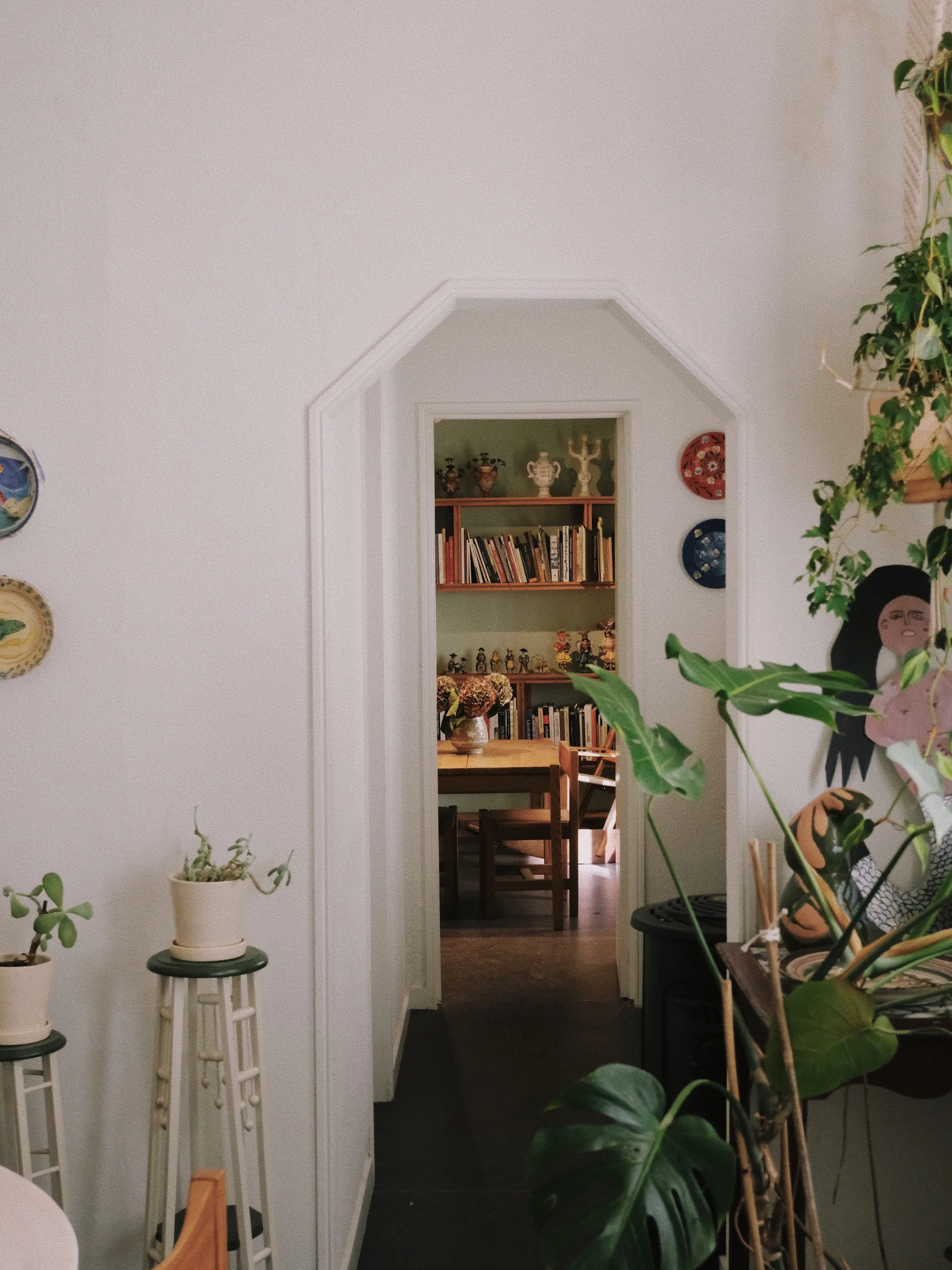
On a Wednesday afternoon, we stepped into the studio of art and craftsmanship curator Felipa Almeida in Campo de Ourique. Behind a façade of cobalt-blue azulejos, the studio unfolds like a maze of rooms overlooking a small garden. From the moment we walk in, it feels as though we’ve entered another world — one filled with colorful artisan pieces at every turn. As Felipa points out, the space is constantly evolving, as a living intersection of Portuguese craft, curation, design, and cultural heritage.
1. Felipa, can you tell us more about your studio and practice?
My studio is divided into three areas, each reflecting a part of my practice. First, I curate thematic exhibitions, which I’ve been staging twice a year for the past five years. Each show focuses on a specific theme from Portuguese craft or cultural heritage, combining my own finds with new pieces I’ve commissioned to artists I collaborate with. Between exhibitions, the studio remains open by appointment, allowing visitors to explore and collect from an ever-changing display.
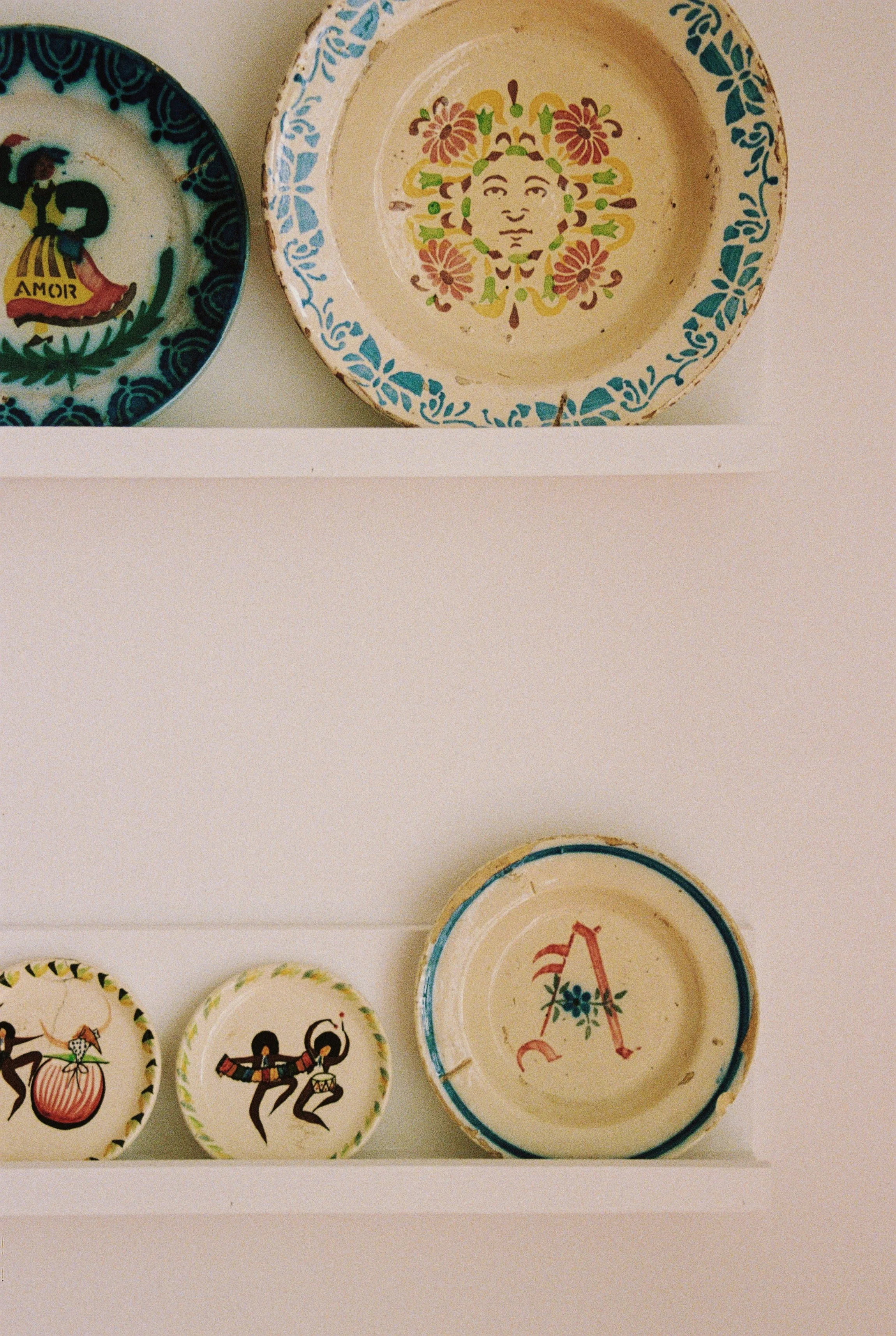
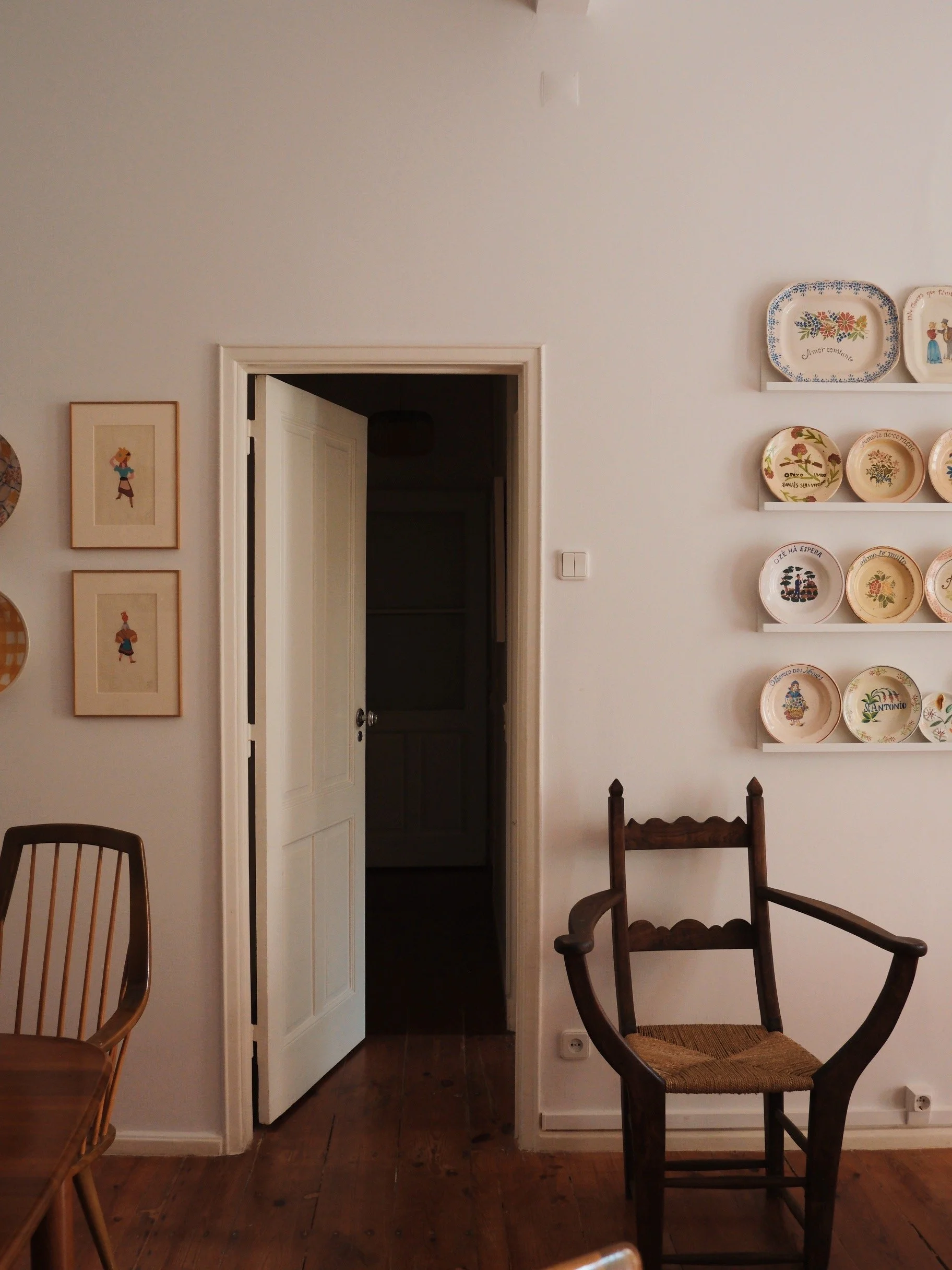
The second area is editorial. Together with anthropologist Maria Manuela Restivo, I publish books that expand on my exhibitions and explore Portuguese craft traditions. We’ve written about moringues and pratos falantes (“talking plates”), researching historic pieces in private collections and pairing them with newly commissioned works. We’re also creating a series highlighting private collections, giving visibility to objects rarely seen in museums.
The third part of my work is my personal collection, composed mostly of ceramics—objects I’ve found or that have been specially created for past exhibitions. It’s a living archive and a constant source of inspiration as patterns, forms, and materials spark new ideas and collaborations.
2. How has your own collection come together?
It began five years ago with ceramics, inspired by my time running an interior design studio with my friend, architect and interior designer Ana Anahory. Back then, we were already focusing on exploring Portuguese materials and crafts, visiting artisans across the country. These experiences sparked a deeper interest in collecting, researching, and preserving these objects. I started buying pieces and creating a collection, albeit not consciously. Today, the collection is catalogued, each piece photographed and traced for its origins. Experience, research, and the books I’ve studied have sharpened my eye, making the buying process more conscious. It helps me focus on specific themes and types of pieces, rather than collecting just about everything, and makes discovering unique, special objects all the more exciting. I’m endlessly fascinated by the variety of plates — their patterns, inscriptions and little imperfections.
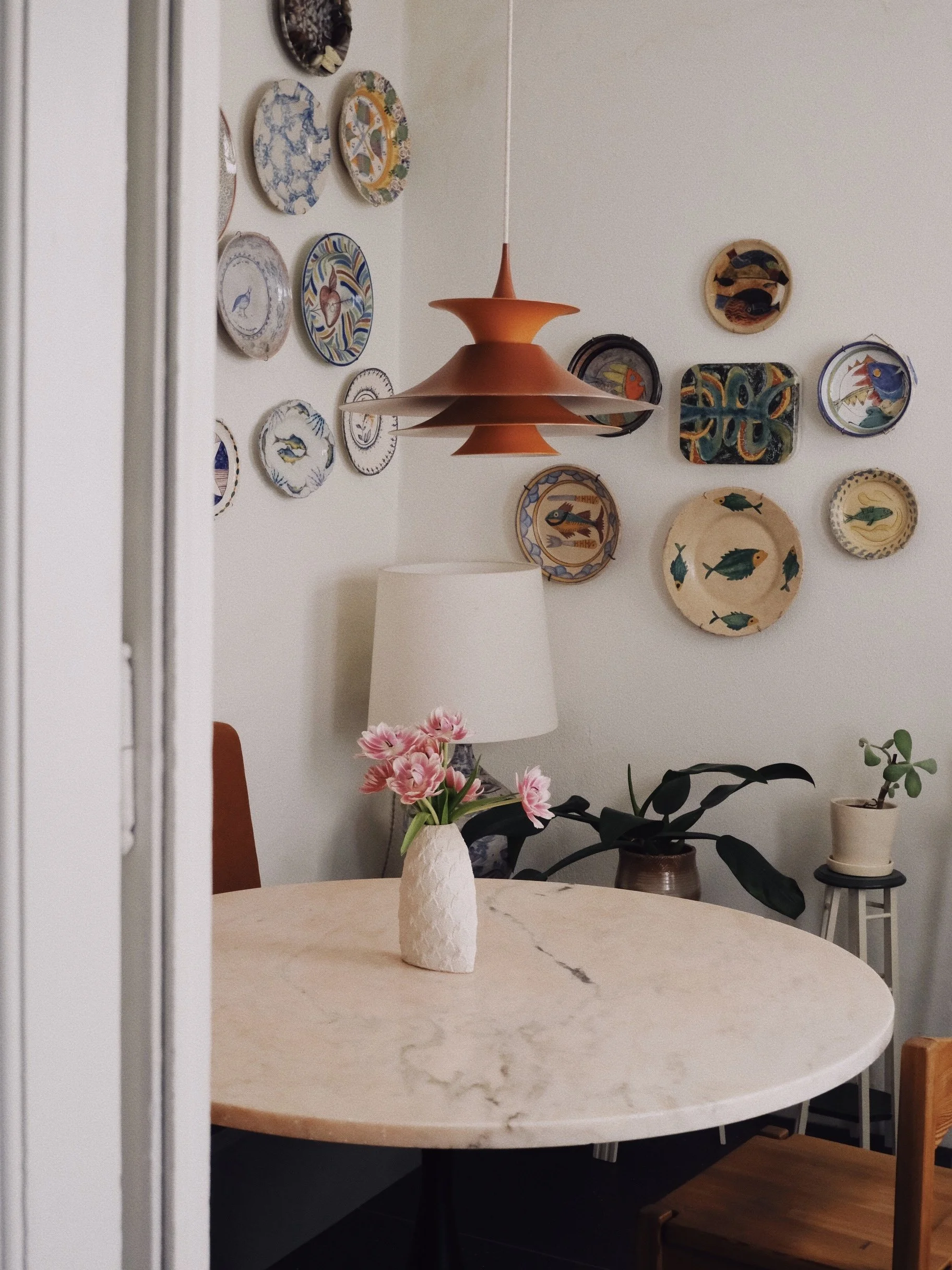
Inside Felipa Almeida’s studio.
3. Is it fair to say your work is driven by a desire to bring Portuguese craftsmanship into a new light?
Well… on my own scale, definitely. I’m as moved by Art that is considered academic than I am by a piece made by craftsmanship. I know it’s not seen as the same, probably because Art is admired for its aesthetic when craftsmanship is primarily utilitarian. I understand the existing gap. But my aim is to share the enthusiasm of having both on the same, horizontal level, thus casting a new light on craftsmanship. I’m glad to see it gaining more respect and dignity, as more people seek balance in a digital world. Still, much remains to be done to preserve knowledge and pass it on to younger generations, and it can be hard to make a living from it. I hope it gains the financial support it deserves to keep existing.
4. How do you create a dialogue between craft traditions and contemporary creation?
Mostly through the exhibitions. For example, as I was mentioning earlier, I’ve dedicated an exhibition to the moringue, which is an old, traditional Portuguese object that served as a double-sided communal water jar. I’ve invited 27 artists (Portuguese and non-Portuguese, but living in Portugal) to make new ones. Initially, most of the artists had never heard of this object before, so it became a discovery and a creative experiment all at once. I love commissioning pieces and collaborating closely with artists — giving them a theme, exchanging ideas, and seeing the process from prototypes to finished work. Each pop-up brings old and new pieces into dialogue, while the books we publish alongside them extend that conversation, making this heritage accessible to a wider audience.
5. What are you working on at the moment, and what comes next for you?
I’ve been organizing the pop-up exhibitions for 5 years now, and this year marks the end of a cycle. A few months ago, I launched a book "O Livro das Feiras" gathering material from all the pop ups, as a way to honor this cycle, and all the people involved. Along with Ana Anahory, we’ve also worked on a book showcasing beautiful Portuguese houses. Our goal was to highlight the quality of Portuguese interiors — the know-how, the techniques, the materials, many of which are disappearing. It’s a way to celebrate a heritage that remains little known outside the country. Looking ahead, we are now thinking of doing a second one and I am working on two more books. Making books has become quite addictive...
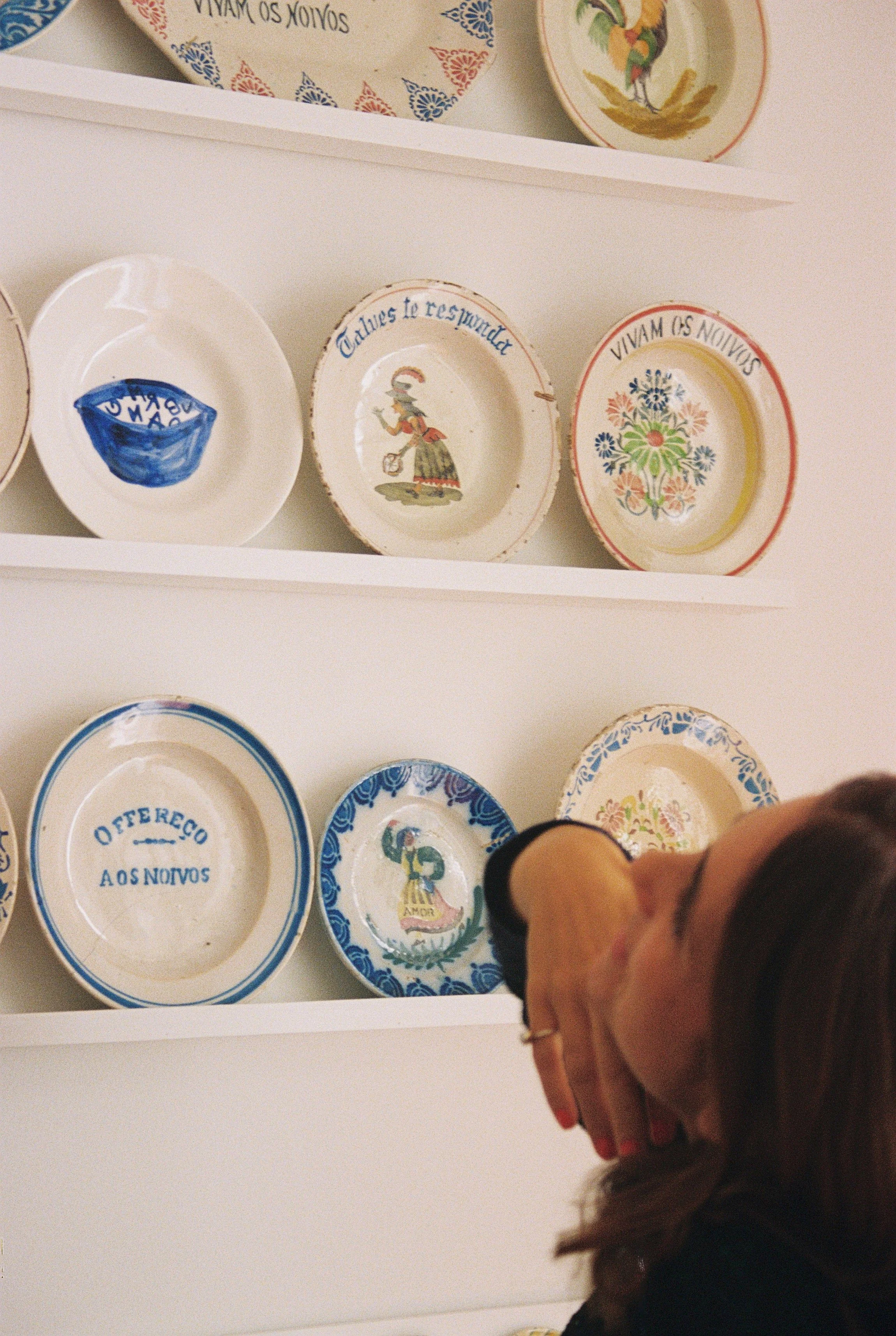
Felipa & pratos falantes (“talking plates”) collection.
Felipa’s recs of unassuming museums worth visiting:
Museu de Olaria, Barcelos.
Museu municipal Professor Joaquim Vermelho, Estremoz.
Museu do Barro de Redondo, Redondo.
