
Editor’s note
“Growing up, I have always been fascinated by my mother’s and grandmothers’ endless cookbooks and loose sheets of paper covered in handwritten recipes - the ones they would always return to whenever they forgot something halfway through baking. I find the practicing fascinating, but also a little frightening, that something so ordinary and simple - something that was once such a natural part of so many women’s daily lives - can somehow become lost in time.
In this article of Quotidiano, I want to celebrate the women in my family who grew up in generations without a Notes app on their phones, and for whom cooking was never inspired by fast-paced Reels or the latest trendy recipes (naturally, every generation has its own good and bad things, but there is something particularly special about the knowledge that was passed down simply by doing, watching and remembering). For this first issue of our Food section, I asked Jacinta from A Padaria - someone who has become family in my heart - to share one of her simplest recipes with me. I wanted something familiar, something that could belong to so many family tables, from north to south of Portugal: broa de milho. Translated simply as corn bread, broa de milho is a traditional Portuguese bread made with corn flour. It is the kind of food that carries so much history in it - a recipe shaped by generations, by necessity, by the land, and by the hands of the women who made it before us.
This one is Jacinta’s.
Love,
Teresa“
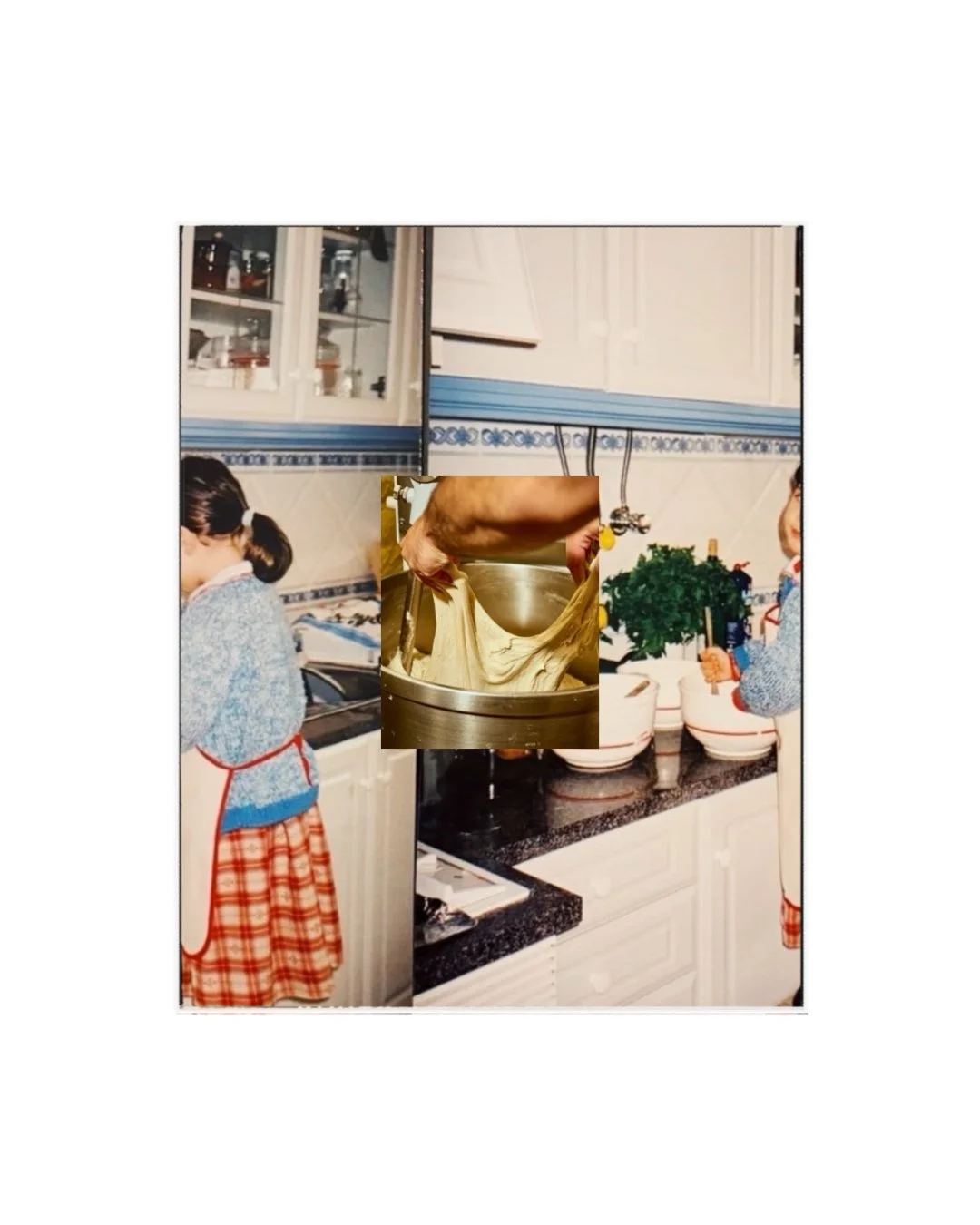
Mini editor of Quotidiano.
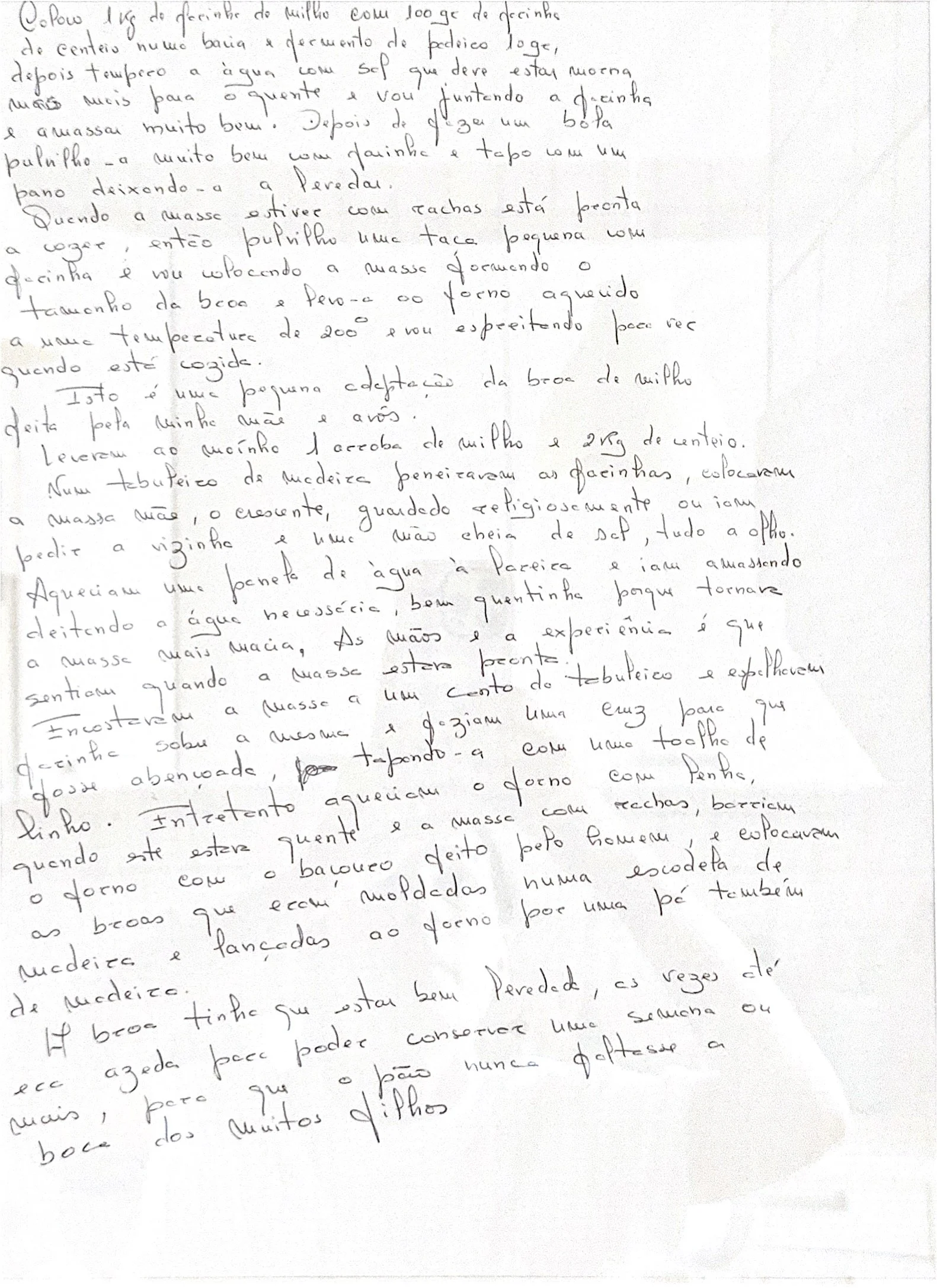
Jacinta’s handwritten broa de milho recipe.
Ingredients
1 kg corn flour
100 g rye flour
Salt, to taste
Warm water, as needed
A portion of crescente (traditional sourdough starter)
Method
Mix the corn flour and rye flour in a large bowl;
Add the crescente and season with salt;
Gradually add warm water, mixing and kneading until you have a soft, cohesive dough;
Shape the dough into a ball, dust it with flour and cover it with a cloth. Leave it to rest and rise until cracks begin to appear on the surface;
Once the dough is ready, shape it into a round loaf. Dust a small bowl with flour and use it to help give the broa its shape;
Place it in a preheated oven at 200°C and bake until the crust is golden and the bread is cooked through.
Notes from Jacinta - This is her mother’s and grandmother’s recipe.
Traditionally, the dough was allowed to ferment naturally using crescente, a piece of dough saved from the previous bake. The crescente would be passed from one batch to the next, and sometimes even shared between neighbours.
Before the dough was left to rise, it was blessed. A cross was made over the dough, asking for the bread to rise well. There was a belief that the blessing, together with the warmth and time given to the dough, helped it grow.
The bread was baked in a wood-fired oven, with the fire prepared beforehand and the embers pushed aside to make room for the loaves. The broas were shaped by hand and placed directly into the hot oven, where they would bake until their crust was firm and golden.
If kept in the right conditions, this bread could last for weeks without spoiling. A reminder of a time when bread was made to nourish a household, not simply to be eaten that same day.
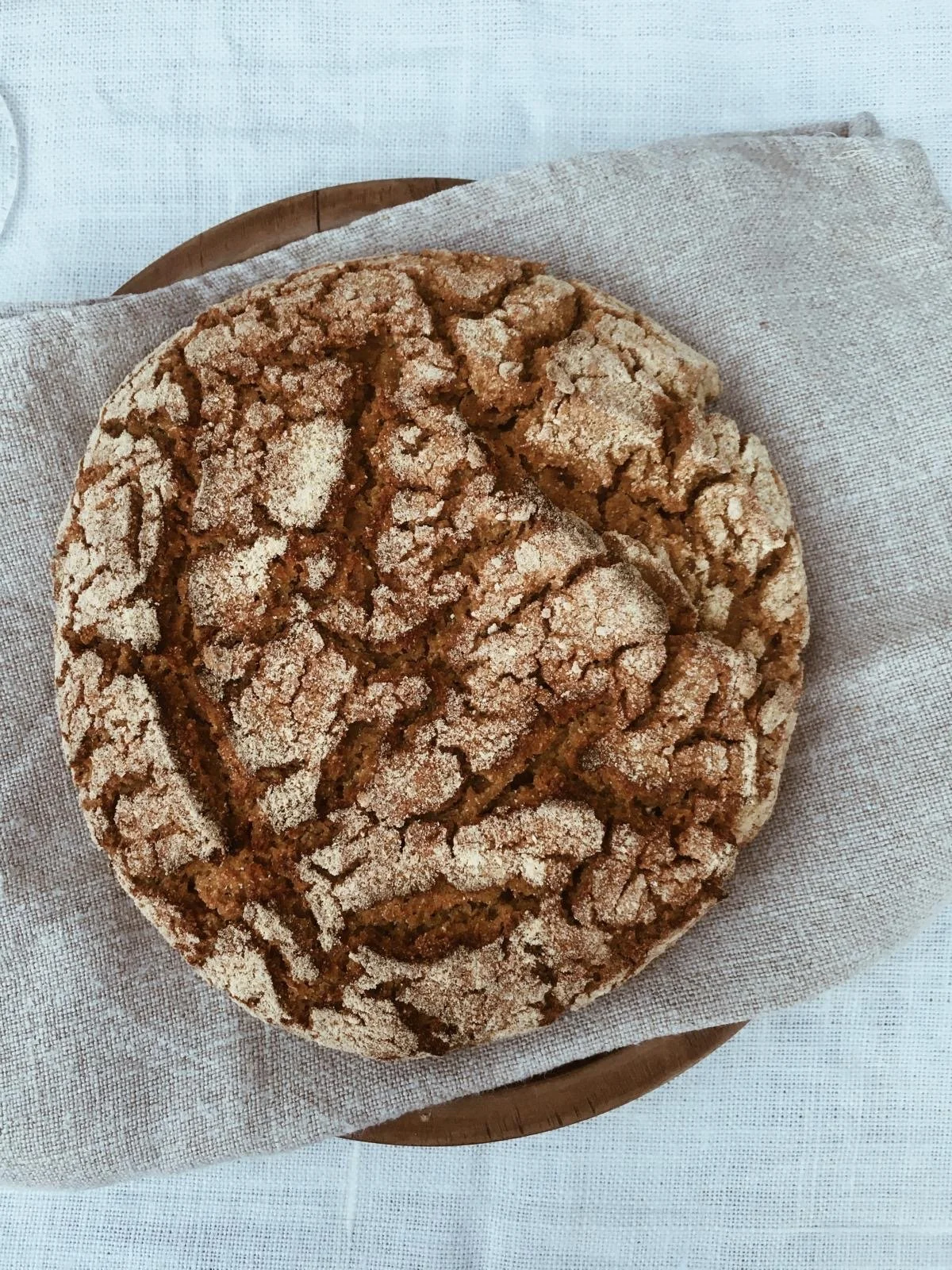
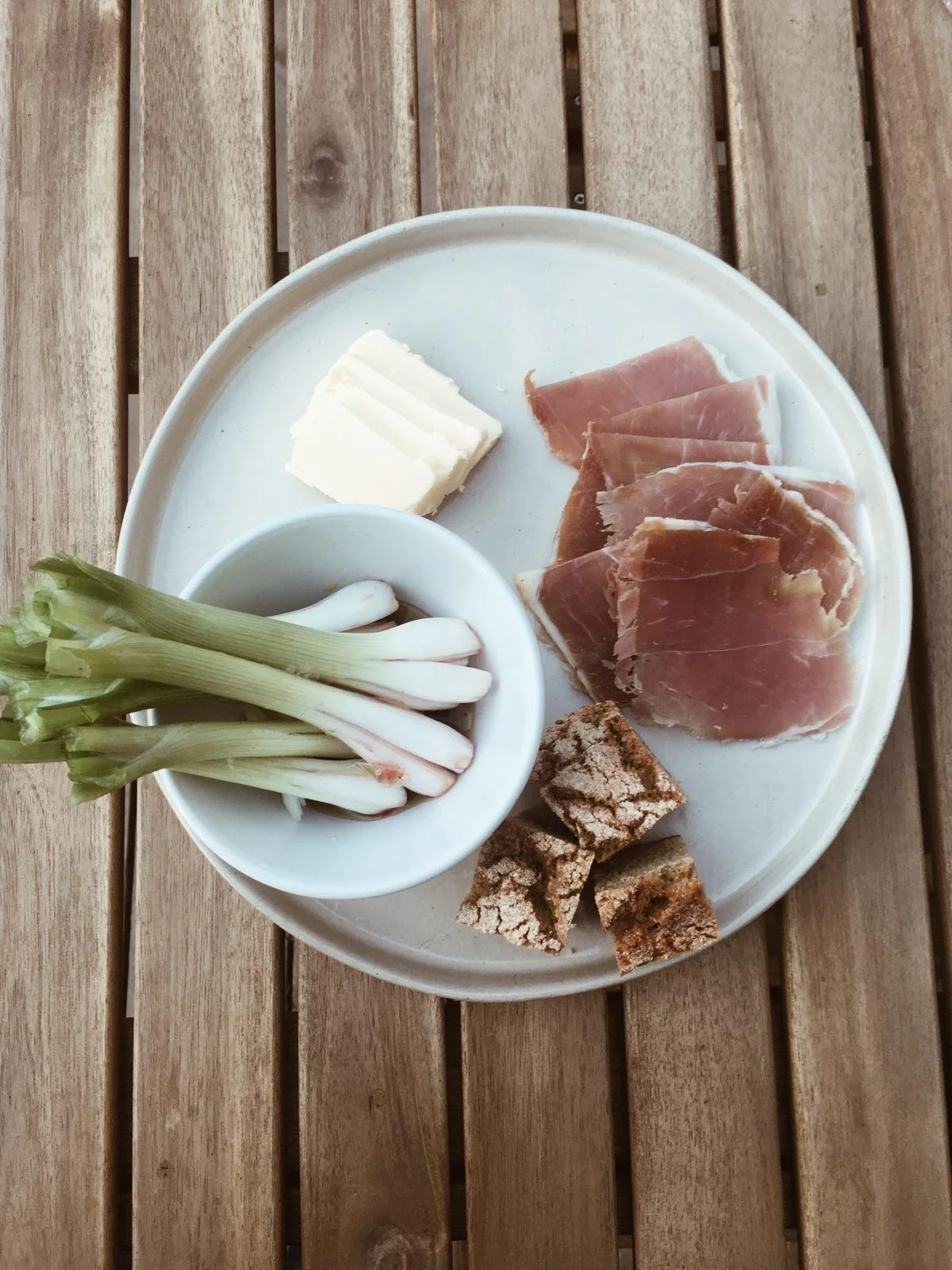
Photo courtesy of Maria, Jacinta’s daughter and host of A Padaria.
